Paul Cézanne
Represented by Park West Gallery
Biography
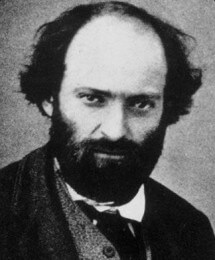
Paul Cézanne was born on January 19, 1839, in Aix-en-Provence, France, and became one of the most influential figures in 20th century art. A pioneer of the Post-Impressionist movement, he inspired the development of Cubism and transformed how artists approached form and structure. Though his father, a successful banker, initially discouraged his artistic ambitions and pushed him toward law school, Cézanne eventually moved to Paris in 1861 to pursue his dream with his father’s financial support.
Cézanne’s path to recognition was far from easy. After early rejections and periods of self-doubt, he found mentorship with Impressionist painter Camille Pissarro in the 1860s. In 1872, Cézanne moved to Pontoise with Hortense Fiquet, who would become his wife, and their son Paul. There he painted extensively with Pissarro, participating in the first Impressionist exhibition in 1874. However, Cézanne soon moved beyond Impressionism, seeking to create something more structured and lasting. His focus on geometric forms and spatial relationships laid the groundwork for Cubism, earning him the title from Pablo Picasso as “the father of us all.”
After his first successful solo exhibition in 1895, Cézanne gained widespread acclaim. He continued working despite declining health until his death from pneumonia on October 22, 1906. Today, his works are exhibited in major collections worldwide, and he is represented by Park West Gallery.
Biography compiled by Your Art Vault from Park West Gallery’s published artist information and other public sources.