

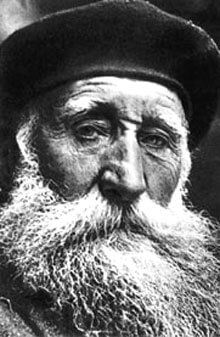
Aristide Maillol
Represented by Park West Gallery
Biography
Aristide Maillol was born in 1861 in Banyuls-sur-Mer, a southern French town. After moving to Paris in 1881 to study art, he enrolled in l’École des Beaux-Arts in 1885. Influenced by the Nabis, a group of French artists known for decorative patterns, Maillol initially excelled at tapestry and opened a workshop that earned him recognition for revitalizing this art form in France.
At nearly 40 years old, an eye disease forced Maillol to abandon tapestry’s intricate work and turn to sculpture. Though he explored painting and woodcut illustration, sculpture remained his primary focus for the rest of his life. In this medium, he set the standard for European and American sculpture until the end of World War II and inspired future artists including Henry Moore, Constantin Brancusi, and Alberto Giacometti.
Maillol concentrated on the female form, preserving the pure simplicity of Classical ideals through calm expression and harmonious balance. Rather than meticulous accuracy, he emphasized rigorous analysis of geometric form and mass that could be viewed in the round. He received numerous commissions, including a 1912 monument to Cézanne and several monumental war memorials after World War I. A major exhibition of his works was held in 1937 at the Petit Palais in Paris.
Today, Maillol’s works are represented by Park West Gallery and permanently displayed in prestigious institutions including the Metropolitan Museum of Art, Museum of Modern Art, Solomon R. Guggenheim Museum, The National Gallery of Art, the Tate Gallery, and the Louvre Museum gardens.
Biography compiled by Your Art Vault from Park West Gallery’s published artist information and other public sources.