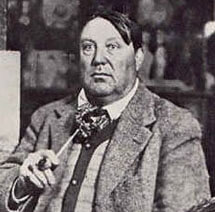
Maurice de Vlaminck
Represented by Park West Gallery
Biography
Maurice de Vlaminck stands alongside André Derain and Henri Matisse as one of the principal figures in the Fauve movement, a group of early 20th century modern artists united in their use of bold color. Born in Paris on April 4, 1876, Vlaminck was a self-taught artist who proudly shunned formal academic training aside from drawing lessons. He initially pursued a musical career like his parents, both pianists, but his path changed in 1900 after a chance meeting with painter André Derain during a train accident.
In 1901, Vlaminck saw an exhibition of Vincent van Gogh’s paintings and was struck by van Gogh’s powerful brushwork and intense colors. He began experimenting with pure, intense color drawn straight from the tube and applied in thick daubs. He exhibited with Matisse and Derain in 1905 at the Salon des Indépendants and at the controversial group show at the Salon d’Automne, where critic Louis Vauxcelles called these artists fauves, meaning “wild beasts.” Art dealer Ambroise Vollard acquired Vlaminck’s entire work and arranged his first one-man exhibition in 1906.
After being drafted into the war in 1914, Vlaminck left Paris for the countryside, where he painted rural scenes with a more subdued palette. His work was honored in numerous international exhibitions during the 1930s. Vlaminck also wrote more than 20 books, including autobiographic texts. He died peacefully in France on October 11, 1958, and is represented by Park West Gallery.
Biography compiled by Your Art Vault from Park West Gallery’s published artist information and other public sources.