

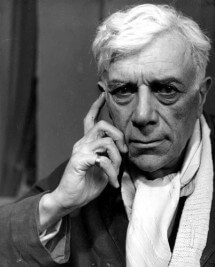
Georges Braque
Represented by Park West Gallery
Biography
Georges Braque, renowned for developing Cubism alongside Pablo Picasso, was born on May 13, 1882 in Argenteuil-sur-Seine near Paris, France. After his family moved to Le Havre in 1890, Braque initially trained as a house painter and decorator like his father and grandfather, while studying fine art at night at Le Havre’s École des Beaux-Arts. He moved to Paris in 1900, earning a certificate in draftsmanship in 1902 before dedicating himself to fine art full time at the Académie Humbert.
After experimenting with Impressionism and Fauvism, Braque’s career transformed in 1907 when he attended a memorial exhibition for Paul Cézanne and met Pablo Picasso. Inspired by Cézanne’s geometric rendering and unconventional perspective, Braque and Picasso developed Cubism together. Art critic Louis Vauxcelles coined the term “Cubism” in 1908 after viewing Braque’s work. Braque held his first solo exhibition that year at the Daniel-Henri Kahnweiler gallery, showcasing his new Cubist style characterized by muted colors and fragmented subjects.
After serving in World War I and suffering a severe head injury, Braque returned to painting in 1917 with freer forms and brighter colors. Beyond paintings, he created lithographs, sculptures, jewelry, and decorative art, including stage decor for Sergei Diaghilev ballets and the ceiling of the Louvre’s Etruscan Room. He received first prize at the 1937 Carnegie International in Pittsburgh. Braque died on August 31, 1963 and was honored with a state funeral at the Louvre. His influential work is represented by Park West Gallery.
Biography compiled by Your Art Vault from Park West Gallery’s published artist information and other public sources.