

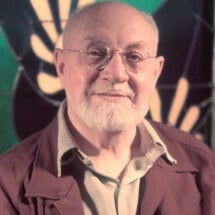
Henri Matisse
Represented by Park West Gallery
Biography
Henri Matisse stands as one of the most influential figures in modern art history. Born Henri-Émile-Benoît Matisse on December 31, 1869, in Le Cateau-Cambrésis, France, he initially studied law from 1887 to 1888 and worked as a legal clerk. His artistic path began unexpectedly in 1889 when, recovering from appendicitis, his mother gave him art supplies to pass the time. Discovering a natural talent, Matisse abandoned law by 1891 to pursue art full-time, studying at the Académie Julian and the École des Beaux Arts in Paris.
Matisse became a central figure in the Fauvist movement, showcased at the 1905 Salon d’Automne in Paris. This revolutionary style featured bright, intense colors and bold brushstrokes freed from naturalistic constraints. After Fauvism disbanded in 1907, Matisse continued evolving, influenced by travels to Morocco in 1912 and 1913, and his 1917 move to Nice in southern France, where he eventually settled permanently. Throughout his career, he explored painting, drawing, sculpture, decoupage, and graphic works, creating commissioned pieces including a mural for the Barnes Foundation in Merion, Pennsylvania, and decorations for the Chapelle du Rosaire in Vence, France.
Despite cancer diagnosis in 1941 and being wheelchair-bound after surgery, Matisse continued creating, particularly masterful paper cutouts. The Museum of Modern Art held a major retrospective in 1951, and the Musée Matisse opened in his hometown in 1952. Matisse died November 3, 1954, in Nice, leaving an enduring legacy celebrated by Park West Gallery and collectors worldwide.
Biography compiled by Your Art Vault from Park West Gallery’s published artist information and other public sources.