

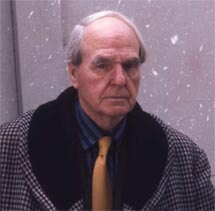
Henry Moore
Represented by Park West Gallery
Biography
Henry Moore, the celebrated English sculptor, is best remembered for his monumental public works exploring the female form, reclining figures, and family themes. Inspired by Michelangelo at age 11, Moore’s path to artistry was delayed by World War I service, where he was injured in a gas attack in 1917. After the war, he used his service grant to attend art school in Leeds, then won a scholarship to the Royal College of Art in 1921, followed by six months studying the Old Masters in Italy and Paris in 1924.
Moore taught at the Royal College of Art for six years before joining the Chelsea School of Art. He married Irina Radetsky and settled in Hampstead among fellow artists. As a member of the Seven and Five Group, he created increasingly abstract works influenced by Picasso and Braque with surrealist touches. He helped organize the 1936 International Surrealists Exhibition, gaining wider recognition when collector Sir Roland Algernon Penrose purchased one of his controversial pieces in 1937.
During World War II, Moore worked as a wartime artist for the English government, dramatically increasing his international exposure. After his home was bombed in 1940, he and Irina moved to a Hertfordshire farmhouse where he remained for life. His daughter Mary’s birth in 1946 inspired family-focused sculptures. That same year, his first retrospective opened at New York’s Museum of Modern Art—seven more would follow.
Moore’s public sculptures appeared at prestigious locations including Cambridge, the University of Chicago, UNESCO in Paris, and College Green near the English House of Parliament. He established the Henry Moore Foundation in 1972 to support public art education. Represented by Park West Gallery, Moore became the defining voice of British sculpture, influencing generations of artists until his death in 1986 at his Hertfordshire home, now a 70-acre museum.
Biography compiled by Your Art Vault from Park West Gallery’s published artist information and other public sources.