

Japanese Woodcuts
Represented by Park West Gallery
Biography
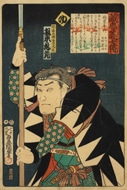
The majority of Park West Gallery’s Japanese woodcut collection was created during Japan’s Edo period (1615–1868). Known as ukiyo-e, or “pictures of the floating world,” these prints depicted worldly pleasures and earthly delights, offering an escape from the rigid class divisions that separated Japanese nobles from the warrior class. Although many warriors had accumulated great wealth, strict social hierarchies kept them in a lower tier. The “floating world” became their domain, where they could enjoy elaborate tea houses, the company of courtesans and geishas, and the Kabuki Theater.
The most famous woodcuts portray scenes from Kabuki Theater, which dramatized fantastic, supernatural, and mythological tales deeply rooted in Japanese history. Actors froze at the height of dramatic moments, holding powerful poses. Each performer had signature traits—how long he held his pose, his family crest, or the colors in his costume—making them instantly recognizable in prints. Artists captured these frozen moments, including symbolic objects or notorious scenes that revealed the character and story.
When Japan resumed trade with the United States in 1854 and Europe by 1868 after a 200-year embargo, these prints quickly became popular. Renowned artists like Henri de Toulouse-Lautrec, Edgar Degas, James Whistler, and Vincent van Gogh collected them, incorporating their sharp perspective, line, and color into Western art. Park West Gallery represents works by many early modern Japanese artists, including Kogyo, Kunichika, Toyokuni III, and Chikanobu.
Biography compiled by Your Art Vault from Park West Gallery’s published artist information and other public sources.