Archives: Artists

  • Michael Milkin

    Michael Milkin

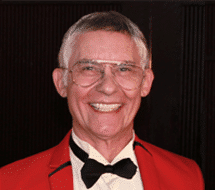
    Michael Milkin interprets nature through distinctive depictions of birch trees and flowers, capturing the majesty and freedom of seasonal landscapes. Drawing on Impressionism, his native Ukraine, and the seascapes of his adopted homeland Israel, Milkin creates serene artwork that is exhibited and collected worldwide and represented by Park West Gallery.

    Born in Kharkov, Ukraine in 1963, Milkin studied architecture at Kharkiv National University of Architecture and Civil Engineering, earning a Master of Architecture. He later attended the Pedagogical Institute in Kharkov to study graphics and arts. In 1994, he began teaching fine art and joined the National Union of Artists of Ukraine, with many of his students becoming professional artists themselves. He exhibited work across Ukraine, France, and Germany before immigrating to Israel in late 2001 to dedicate himself fully to his art.

    Milkin concentrates on still lifes and landscapes, painting with acrylics and oils using thick, dramatic brushwork and brilliant colors. The birch tree holds special significance in his work, symbolizing homeland, nature, and purity in Slavic folklore. His technique involves creating outlines, filling them with modeling paste applied by palette knife, layering bright acrylic paint to create heavy texture, then applying varnish to accent colors. Inspired by Impressionists like Monet and Cézanne, as well as Russian landscape artist Fyodor Vasilyev, Milkin also paints vibrant floral bouquets in shades of red, orange, and yellow.
  • Shan-Merry

    Shan-Merry

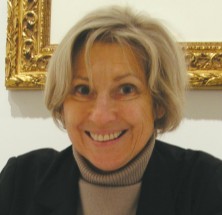
    Shan-Merry began her artistic studies in 1957 at the Ecole Nationale Superior des Arts et Metiers in Angers, France. By 1972 she was working as a professional fine artist and began exhibiting regularly in Paris and throughout the South of France, including Provence, Cannes, Antibes, and Grasse, as well as other Mediterranean locations.

    By the 1990s her works were included in prestigious international collections and exhibitions in Belgium, Germany, Japan, and the United States. Beyond her fine art, Shan-Merry has designed scarves for HERMES, published numerous books and catalogs, appeared in French television features, and created illustrations for various periodicals. She continues to create watercolors and limited edition graphic works, and is represented by Park West Gallery.

    Among her important distinctions are the New York Watercolor Prize in 1974 and the Italian Academy “Gold Medal” Signature Prize in 1979. Her vibrant, expressive style has earned her recognition across continents and made her work highly sought after by collectors worldwide.

  • Victor Spahn

    Victor Spahn

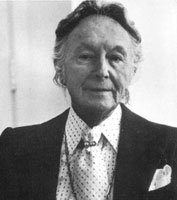
    Victor Spahn was born on March 20, 1949 in Paris as a second generation Russian. After completing his secondary studies, he worked for a mosaic fabricator and created his first mosaic wall for pleasure. This early experience with mosaic techniques directly influenced his distinctive painting and printmaking style, which suggests movement and dynamism as he captures the essence of particular moments. He works with a combination of palette knife and brush and has achieved great success in lithography, serigraphy, and hand-embellished graphic works.

    Often called the “Painter of Movement,” Spahn draws inspiration from sports, dancers, and energetic activities, painting championship sailboat races, rugby matches, prima ballerinas, and tennis stars with individual grace and swift motion. His career highlights include participating in the Salon of Independent Artists in France in 1970, winning first prize in New York for a mosaic table, and personal exhibitions in Paris in 1976 for the Societe Toyota and at Galerie Wally Findlay in Chicago and Palm Beach, Florida in 1984. He designed the set for the televised play “Rembrandt of Glass” in 1981 and created a poster for the 1988 world championship of handball.

    Spahn’s achievements include creating the cover for the 100th anniversary Michelin Guide for L’Astrance and having his serigraph “Autumn Polo” acquired by Jacques Chirac, President of France. He was guest of honor at the 42nd International Exhibition of Painting and Sculpture “Art Movement” in Sainte-Maure de Touraine in 2011 and at Amiens and Ribemont-sur-Ancre in 2012, when he also served as Ambassador of the Lexus GS 450. The French government honored him by naming a newly built housing community after him, placing his name alongside buildings named after Henri Matisse, Camille Claudel, Beethoven, Bach, Mozart, Louis Pasteur, and Thomas Edison. In 2013, he moved his studio to the Montparnasse district of Paris into a workspace once belonging to impressionist painter Tsuguharu Foujita. His work was featured at the prestigious Polo Paris, and for two consecutive years he participated in exhibitions organized by the French Ministry of Defense and Veterans Affairs benefiting injured soldiers and families of fallen soldiers, with his artwork selected as the 2013 poster. In 2015, Spahn was mentioned alongside Marc Chagall, Victor Vasarely, and Jackson Pollock in “Gordes: Le temps des artistes,” chronicling talented artists related to Gordes, a commune in southeastern France. Spahn is represented by Park West Gallery.

  • Yuval Wolfson

    Yuval Wolfson

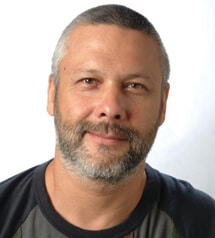
    Yuval Wolfson explores emotion, consciousness, and the passage of time through his expressive paintings, which have captivated collectors worldwide with their subtle portrayal of light and humanity. Born in Petah Tikva, Israel in 1966, Wolfson grew up surrounded by creativity through his grandfather, award-winning poet Y.Z. Shargel. He began painting at age 5 and never stopped, though he briefly joined Israel’s Air Force at 18 with dreams of becoming an astronaut before leaving after 10 days to pursue art full-time.

    Wolfson earned a scholarship from the Tel Aviv Museum of Art to attend the prestigious Avni Institute of Art and Design in Tel Aviv, but left after a year to study directly under his teacher, Naftali Golomb. At 21, he met legendary artist Itzchak Tarkay, who became his mentor and shared studio space with him for many years. Wolfson’s first solo exhibition in Norway, titled “Monet’s Garden,” depicted the same flower in 24 paintings filtered through different hours of the day, earning him recognition in Europe and the United States.

    Working in an expressionist and abstract style with geometric shapes and Cubist influences, Wolfson favors animals, landscapes, and automobiles as subjects to express human emotions without traditional portraiture. He is represented by Park West Gallery and currently resides in Hollywood, Florida with his family.

  • Jon Rattenbury

    Jon Rattenbury

    Jon Rattenbury is celebrated for his meticulous attention to detail and vibrant use of light and color to capture nature’s awe-inspiring beauty. Born in Cheltenham, England in 1966 into an artistic family, he moved to the United States at age 3 and eventually settled in Northern California. The region’s diverse landscapes, from the majestic Sierras to the beautiful coastline, became his lifelong artistic inspiration.

    Essentially self-taught, Rattenbury began drawing at an early age and moved on to painting with oils and acrylics at age 13. After high school, he worked in stained and etched glass design, photo retouching, and the printing industry while developing his individual artistic skills. In the 1990s, he began displaying his work in galleries in Southern California, allowing him to pursue painting full-time. He founded Rattenbury Fine Arts in 2004 and is now represented by Park West Gallery.

    Rattenbury is particularly known for his dimensional acrylics on aluminium, a unique process he created that combines aluminium, modelling paste, polymer clay, resin, glass, stone, sand, and metallic acrylics. Trees, leaves, and other elements are cut out and raised from the background to create depth and texture. His work has been featured in galleries across the United States and internationally, with enduring success in Japan, where he has exhibited in Nagoya, Tokyo, Osaka, and Hiroshima.

  • Nicholas Yust

    Nicholas Yust

    Nicholas Yust is a true innovator in contemporary metal art, bringing his Master of Science in metallurgical engineering to every creation. Born in Cincinnati, Ohio in 1978, he combines artistic vision with technical brilliance that has captivated collectors worldwide. His work is represented by Park West Gallery.

    Yust began his artistic journey at the University of Cincinnati’s School of Design, Art, Architecture, and Planning, studying fine art and art history before transferring to Wright State University to pursue engineering. During his studies, he interned with the United States Air Force at Wright Patterson AFB, researching superconductivity and thin film-coated conductors, earning both a B.S. in materials engineering and an M.S. in metallurgical engineering.

    After creating his first aluminum panel wall sculptures, Yust developed over a dozen unique grind patterns that became signature elements of his work. He invented an atomized acrylic painting process for metal, remaining the only metal artist in the industry with this capability. Today, he has perfected more than 50 unique grind patterns combined with transparent coatings that create a remarkable holographic effect through a spectrum of colors.

    Working full time from his Cincinnati metal studio, Yust has created monumental commissions for major corporations including NBC, Starbucks, P&G, CrossFit, Siemens, RE/MAX, and Ford, as well as government agencies like the Department of Defense, Department of Energy, and NASA. He donates approximately 20 original works and a portion of his revenue annually to charitable organizations including St. Jude’s, SPCA, The Junior Arthritis Foundation, and Juvenile Diabetes Research.

  • Michael Cheval

    Michael Cheval

    Michael Cheval is a contemporary artist celebrated for his “Absurdist” paintings, drawings, and portraits that turn reality on its head. Born in 1966 in Kotelnikovo, Russia, Cheval grew up surrounded by creativity—his grandfather was a professional artist and sculptor, his grandmother wrote children’s poetry, and his father was both a soldier and artist. This artistic heritage sparked his passion for drawing at an early age.

    In 1980, Cheval’s family moved to Germany, where the museums, castles, and scenic landscapes of the south inspired the storybook quality of his work. After serving two years in the Soviet Army, he moved to Turkmenistan in 1986 and trained at the Ashgabat School of Fine Art, where he absorbed Eastern philosophy. He held his first solo exhibition in 1990 at the Turkmenistan National Museum of Fine Art. In 1997, Cheval immigrated to the United States, where he developed his distinctive style influenced by Lewis Carroll, Salvador Dalí, and René Magritte.

    Cheval’s absurdist approach presents each painting as a puzzle filled with metaphorical references and hidden meanings. He has won numerous awards, including Best of Worldwide Oil Artists by Kennedy Publishing in 2009, and is a member of the National Arts Club in New York City and the Society of Art and Imagination in London. Represented by Park West Gallery, Cheval invites viewers to become “co-authors” by discovering their own interpretations of his intricate visual stories.

  • Duaiv

    Duaiv

    Born in 1952 near Bordeaux, France, Duaiv grew up surrounded by creativity—his mother was a classical pianist and his father a sculptor. He picked up his first paintbrush at age three and completed his first oil painting by nine. When his family moved to a nearby island, his father discouraged an artistic path and bought him a cello instead. Having met renowned cellist Pablo Casals at age eight, Duaiv embraced the instrument but never abandoned his love of painting. He pursued classical training in both disciplines, studying cello under Bernard Michelin at the Conservatoire Nationale de Musique in Paris and painting at the École des Beaux-Arts.

    At twenty-three, Duaiv met Salvador Dalí, who encouraged him to blend his dual passions professionally. Today, Duaiv is represented by Park West Gallery and maintains a studio in Florida, where he obtained American citizenship in 2011. His colorful, contemporary Impressionist works draw inspiration from Claude Monet, Paul Cézanne, Vincent van Gogh, Johannes Vermeer, and Frans Hals. Working with palette knives, small brushes, and even his fingers, he uses only six to eight colors yet achieves a full spectrum of hues.

    For Duaiv, art and music remain inseparable. He practices cello each morning and paints four to six hours nightly, always accompanied by music, creating uplifting works that capture landscapes, cityscapes, and portraits with dynamic brushstrokes and pastel tones.

  • Erté

    Erté

    Romain de Tirtoff, known as Erté from the French pronunciation of his initials, was born in St. Petersburg, Russia, into a socially elite family destined for military service. Instead, he defied expectations and moved to Paris in 1912 at age 18 to pursue his passion for art and fashion. Beginning his career under Paul Poiret, the most respected couturier in Paris at the time, Erté went on to work for Harper’s Bazaar for 22 years, creating more than 240 magazine covers. He became notorious for his elaborate costumes and exotic designs, especially at the Folies-Bergère in Paris, and briefly worked with MGM in Hollywood in 1925 at the invitation of Louis B. Mayer.

    Often referenced as one of the founders of Art Deco, Erté defined the style as a fusion of Art Nouveau’s curvilinear designs with Cubist, Constructivist, and geometrical elements of modernity. Influenced by Persian miniatures, he would often use a brush with a single hair to complete his gouache paintings. Erté began creating lithographs and serigraphs in the 1970s, publishing more than 180 designs through the Circle Fine Art Corporation and various publishers. In 1979, the Smithsonian Institution organized a retrospective of his work that traveled to major museums across the U.S. and Canada. At his death at age 97, he was considered one of the most influential artists of the 20th century and is represented by Park West Gallery.