Archives: Artists

  • Ben Avram

    Ben Avram

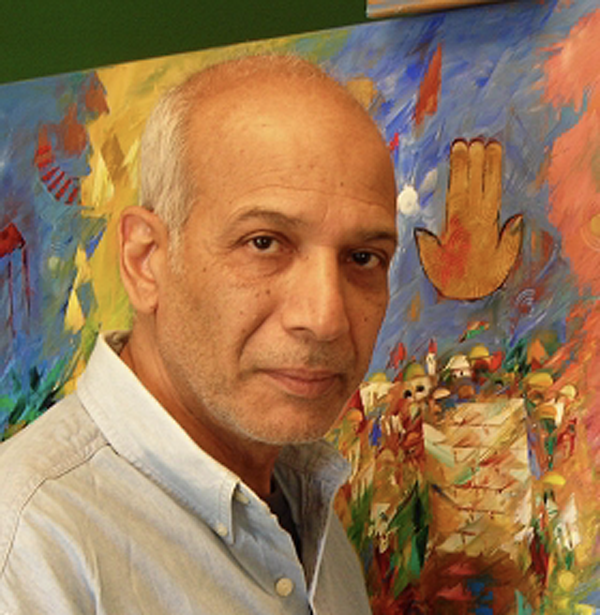
    Ben Avram was born in Bombay in 1941 during World War II, but his artistic journey truly began after he immigrated to Israel as a teenager in the mid-1950s. In 1965, he graduated from the prestigious Bezalel Academy of Art and Design in Jerusalem, Israel’s oldest institution of higher education. Today, Avram considers himself a Jerusalem painter who has devoted his career to capturing the essence of his adopted homeland through oil paintings and watercolors.

    Avram’s work focuses on Israel’s diverse landscapes, from Jerusalem’s alleyways and famous gates to the nation’s seasides, streets, and historic towers. He paints with intimate warmth and authenticity, avoiding the exotic in favor of scenes that feel familiar and true to life. His art is distinguished by the way he captures the unique quality of sunlight in Israel, which casts rich colors across the countryside and cities. He weaves symbolic elements throughout his paintings, including peace doves, menorahs, Shabbat candles, arched entryways, and religious festivals, all rendered in soft, welcoming tones.

    His technique combines refinement with spontaneity, building up layers of oil and color that create a sense of movement and energy. The results are works that transport viewers into his world through style and illumination, transforming ancient Israel into something bold and new. Avram is represented by Park West Gallery.
  • Mark King

    Mark King

    Mark King, a passionate champion of Impressionism and the Ecole de Paris, was born in Bombay in 1931 to British parents. He spent his formative years in India during the final days of the British Raj, an exotic upbringing that would profoundly influence his artistic vision. After graduating from La Martiniere College in Calcutta in 1948, where he studied both botany and art, King sailed to England to attend Bournemouth College of Art. He later spent seven years as resident scenic designer at the Oxford Playhouse Theatre before moving to Paris in 1961 to dedicate himself fully to painting, studying at the Ecole and the Louvre.

    During the 1960s in Paris and Italy, King worked as a plein air painter, studying light and atmosphere like the Barbizon School and Impressionists before him. His move to the United States in 1968 prompted a shift to studio work. King draws Parisian street scenes from memory while using photography to capture sporting subjects, condensing various views into single compositions. He works primarily in acrylic, masterfully manipulating a palette knife ninety percent of the time and meticulously layering colors and glazes to create depth and texture.

    King’s subjects range from familiar Paris monuments to animated depictions of polo, fox hunts, ice hockey, and horse racing, all reflecting his passion for sports and the outdoors. His childhood in India inspired his fascination with elephants, camels, tigers, and botanical elements that appear throughout his work. Represented by Park West Gallery, King has achieved superb mastery of color and texture in the full maturity of his career.

  • Andras Markos

    Andras Markos

    András Markós was born on June 16, 1950, in Miercurea Ciuc, Harghita County, Romania. He studied fine arts at the Ion Andreescu Art Academy in Klausenburg, Romania, from 1969 to 1973. After graduation, Markós worked as a graphic designer before serving as curator of medieval church art at the Komitatsmuseum in Csíkszereda and later as set designer for the Hungarian State Theatre. In 1980, he emigrated to Vienna, where he held a residency at the Academy of Fine Arts and Vienna University before resettling in Germany in 1981. The artist passed away in 2020.

    Markós established himself as an internationally renowned artist, represented by Park West Gallery, with exhibitions throughout Europe and America beginning in 1981. His work was grounded in abstract expressionism and conceptual art, frequently exploring thematic series that incorporated words, calligraphic ideas, and collage. He worked in multiple media, including painting on canvas and paper, lithography, serigraphy, etching, and ceramics.

    His notable group exhibitions included “Zalavar 74” in Hungary in 1974, the Joan Miro International Competition for Drawing in Barcelona, Spain, and “Clausur” with “Die Gruppe” at L’Esplanade la Defense, Paris, in 1984. One-person shows appeared at Galerie Basilisk in Vienna in 1981, Neues Rathaus Galerie in Leonberg, Germany, and Maison des Arts in Belford, France, in 1987.

  • Pierre Eugene Cambier

    Pierre Eugene Cambier

    Pierre Eugene Cambier brilliantly captured French cityscapes, waterways, and countrysides in his watercolor paintings. He first began to publicly exhibit his artwork at the Salon des Independents in Paris in 1948. His work was included in the annual Salon d’Automne exhibition between 1953 and 1960 and later on at the Galerie Urban in Paris, the Galerie O’Hara in London, and the Galerie Sothman in Amsterdam.

    Cambier continued to work and paint in Paris, where he also taught drawing and illustration to budding artists, until his death in 2000. His masterful depiction of Parisian light, color, and architecture continues to attract collectors to this day, and his works are exhibited in collections around the world.

    Represented by Park West Gallery, Cambier’s legacy also lives on through his daughter, artist Daniele Cambier, who creates lively, naturalistically rendered French scenes in watercolor.

  • Graeme Stevenson

    Graeme Stevenson

    Graeme Stevenson was born in New South Wales, Australia, and knew from age 5 that he wanted to become an artist. His early passions included martial arts, breeding Australian parrots, falconry and taxidermy, which gave him an exceptional understanding of avian anatomy that would shape his career as a wildlife artist. After studying at Sydney Art College while working as a carpenter and paramedic, he left his medical career in his early 20s to travel the world. He obtained a pilot’s license at age 21 and circled the globe 16 times, living in five countries while seeking subjects to paint.

    With more than 35 years as a professional artist, Stevenson evolved from photorealistic wildlife paintings to surrealism and expressionism, combining mathematics, history, archaeology and nature in his work. In 1988, he was commissioned to create every image for “The Atlas of Parrots,” published in 1991, which remains a major reference book found in natural history museums in New York, London and Paris. His paintings have been featured in U.S. Art Magazine and International Artist Magazine, which called him a “master artist.”

    Stevenson created the award-winning television show “Colour in Your Life” in 2010, promoting artists and creativity worldwide. On Australia Day 2017, he received the Medal of the Order of Australia for service to the visual arts. He established the charitable foundation “Paint Your Life” in 2013 to help the disadvantaged through art. Represented by Park West Gallery, Stevenson passed away in June 2022.

  • Albrecht Dürer

    Albrecht Dürer

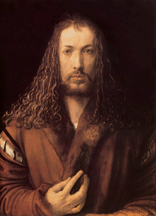
    Albrecht Dürer, the celebrated German artist born May 21, 1471 in Nuremberg, is renowned for his exquisite woodcuts, engravings, and etchings, though he also created oil paintings, watercolors, and sketches throughout his career. He began his artistic education with his father, a successful goldsmith, before apprenticing at age 15 with Michael Wolgemut, where he learned printmaking techniques including woodcut and drypoint.

    Dürer traveled extensively after completing his apprenticeship in 1489, with his visits to Italy beginning in 1494 profoundly influencing his style through exposure to Renaissance approaches to proportion, perspective, and human anatomy. His reputation soared with masterworks including The Apocalypse woodcut series in 1498, The Large Passion from 1497 to 1500, and Life of the Virgin from 1500 to 1510. From 1500 to 1520, he created numerous prints, paintings, and portraits while developing burin engravings in copper. He served as official court artist for Roman Emperors Maximilian I and Charles V beginning in 1518 and created a portrait for King Christian II of Denmark in 1521.

    After contracting an illness during his travels, Dürer returned to Nuremberg in 1521 and focused on writing influential texts on geometry, fortification, and human proportion. He died in Nuremberg in 1528 at age 56, leaving a legacy as one of art history’s Old Masters. His masterful works are exhibited worldwide and remain widely collected today, represented by Park West Gallery.

  • LeRoy Neiman

    LeRoy Neiman

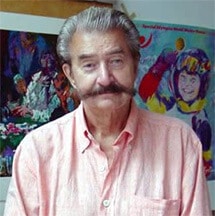
    LeRoy Neiman was born to Turkish and Swedish parents on June 8, 1927, in St. Paul, Minnesota. As a boy, he earned money painting colorful images on shop windows and produce for local grocers. His artistic talent showed early—he created posters for school dances and athletic events before enlisting in the U.S. Army in 1942. While serving as a military cook, he painted murals in kitchens and dining halls and designed stage sets for Red Cross shows.

    After the war, Neiman taught at the School of the Art Institute of Chicago for ten years. He won first prize in the Twin City show for his oil painting “Idle Boats” in 1953 and held his first solo exhibitions that same year in Chicago and Lincoln, Illinois. His work appeared in the “American 25th Biennial Exhibition” in 1957, and he earned a gold medal at the Salon d’Art Moderne in Paris in 1961. Beginning in 1958, Neiman contributed art and writing to Playboy magazine’s “Man at His Leisure” feature for fifteen years.

    Neiman became renowned for his vibrant sports paintings covering everything from boxing and basketball to the Olympic Games. His bold, fast-moving brushstrokes and electrifying colors created works that appear abstract up close but resolve into dynamic, recognizable scenes from a distance. He generously supported the arts, including a six-million-dollar gift to Columbia University in 1995. Neiman is represented by Park West Gallery.
  • Francisco Goya

    Francisco Goya

    Francisco José de Goya y Lucientes was born on March 30, 1746 in the village of Fuendetodos in northern Spain. Often considered among the last of the Old Masters, he created numerous paintings, etchings, drawings and lithographs throughout his career. At fourteen, Goya entered an apprenticeship with local artist José Luján, later studying in Madrid with Anton Raphael Mengs. In 1771, he returned to Saragossa to paint Rococo frescos for a local cathedral. By the mid-1770s, he was working for the Royal Tapestry Factory in Santa Bárbara, creating tapestry cartoons that caught the attention of Spanish royals and led to his appointment as court painter.

    In 1792, an illness during a visit to Cádiz left Goya permanently deaf, profoundly affecting his life and art. He began creating darker, more satirical works, including his 1799 series of eighty prints called “Los Caprichos.” Between 1810 and 1820, he produced “Los Desastres de la Guerra,” eighty etchings depicting the horrors of the French-Spanish conflict. He also created the bullfighting series “Tauromaquia” in 1816 and “Los Proverbios” between 1816 and 1824. From 1819 to 1824, he painted “The Black Paintings” at his home outside Madrid.

    Goya left Spain for Bordeaux in 1824, where he explored lithography and created masterpieces on bullfighting. He died in Bordeaux on April 16, 1828. His works are featured in museums worldwide, including the Museo del Prado in Madrid, and he is represented by Park West Gallery.
  • Ari Gradus

    Ari Gradus

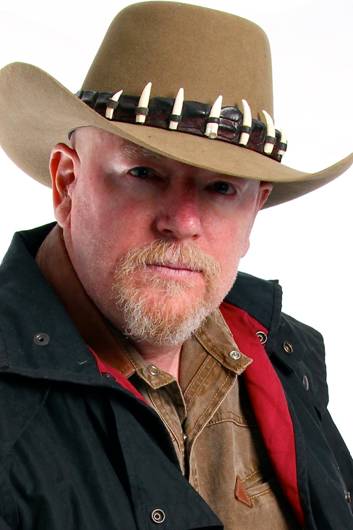
    Ari Gradus was born in a small Israeli village in 1943 and won his first art award in Tel Aviv at age twelve. After studying at the Académie des Beaux Arts in Paris and completing three years of military service, he moved to the United States in 1968 and finished his formal education at New York University. That same year, he began exhibiting across the East Coast and was invited by CBS-TV to appear on the nationally televised program “Look Up and Live.”

    In 1982, the Washington Square Art Committee selected his work for a touring award exhibition, and NBC featured him on “First Estate” the following year. Since 1995, Gradus has been listed in “Who’s Who in American Art” and has received numerous commissions from private collectors and organizations. Notable works include large paintings displayed at Anshe Emeth Temple in New Brunswick, New Jersey, and an original oil of the New York Stock Exchange hanging at N.C.Z. Commodities, Inc. on Madison Avenue.

    His work appears in the permanent collection of the Lower East Side Tenement Museum in New York City, as well as in temples, Jewish community centers, and corporate collections. Represented by Park West Gallery, Gradus has held one-man shows in New York, Boston, Brussels, Munich, Paris, Tel Aviv, and Haifa, earning awards from prestigious venues including the Washington Square Outdoor Art Exhibition and art festivals in White Plains, New York, and Mystic, Connecticut.

  • Al Schreiber

    Al Schreiber

    Al Schreiber creates whimsical, multi-dimensional works that capture the vibrant energy of American city life. Born in New York City’s Lower East Side in January 1929, Schreiber grew up in a unique household where both parents were hearing impaired, making him and his brother the only hearing members of their family. This experience shaped his keen observational skills and deep connection to the sights and sounds of his old neighborhood. After serving in the U.S. Navy’s medical corps and working as National Sales Manager for Hearst Publishing Corporation, where he helped launch Stephen King’s career by successfully promoting the author’s first novel “Carrie,” Schreiber eventually relocated to Florida.

    Schreiber’s artistic journey began unexpectedly during an illness in the late 1990s when his wife gave him drawing materials to pass the time. He discovered he could transfer his vivid childhood memories onto canvas, launching his “Nostalgia” series that depicts life in New York’s five boroughs circa 1940-1950. His work, grounded in the energetic primitive style of Red Grooms and aligned with artists like James Rizzi and Charles Fazzino, features extraordinary detail and historical accuracy. Each three-dimensional piece requires two complete images to create one finished work.

    After his first professional showing sold out completely in 1998, Schreiber turned to publishing to meet demand. He now travels extensively, creating vibrant renditions of major American cities, and is represented by Park West Gallery.