Archives: Artists

  • Japanese Woodcuts

    Japanese Woodcuts

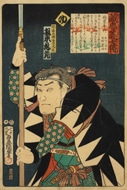
    The majority of Park West Gallery’s Japanese woodcut collection was created during Japan’s Edo period (1615–1868). Known as ukiyo-e, or “pictures of the floating world,” these prints depicted worldly pleasures and earthly delights, offering an escape from the rigid class divisions that separated Japanese nobles from the warrior class. Although many warriors had accumulated great wealth, strict social hierarchies kept them in a lower tier. The “floating world” became their domain, where they could enjoy elaborate tea houses, the company of courtesans and geishas, and the Kabuki Theater.

    The most famous woodcuts portray scenes from Kabuki Theater, which dramatized fantastic, supernatural, and mythological tales deeply rooted in Japanese history. Actors froze at the height of dramatic moments, holding powerful poses. Each performer had signature traits—how long he held his pose, his family crest, or the colors in his costume—making them instantly recognizable in prints. Artists captured these frozen moments, including symbolic objects or notorious scenes that revealed the character and story.

    When Japan resumed trade with the United States in 1854 and Europe by 1868 after a 200-year embargo, these prints quickly became popular. Renowned artists like Henri de Toulouse-Lautrec, Edgar Degas, James Whistler, and Vincent van Gogh collected them, incorporating their sharp perspective, line, and color into Western art. Park West Gallery represents works by many early modern Japanese artists, including Kogyo, Kunichika, Toyokuni III, and Chikanobu.

  • Richard Williams

    Richard Williams

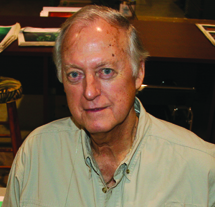
    Since the 1990s, Richard E. Williams has held the distinction of being the number one watercolorist in the world, having sold more than 100,000 limited edition prints. His use of colors and technique of painting wet on wet creates an original style that has never been duplicated by other watercolorists. His works of art can be found in countries around the world, and he is famous for his depictions of boats, waterfronts, birds, tropical fish, seascapes and flowers. Studying his watercolors evokes feelings of peace and serenity that appeal to collectors everywhere.

    Williams shows a delicacy and perception in his work with a distinctive style and deep concentration that has put him in great demand throughout the United States and abroad. The University of Southern Mississippi honored him by requesting a history of his life for their Oral History Program, with the original tapes and manuscripts deposited in the McCain Graduate Library. He is also listed in Who’s Who in American Art.

    His collectors include Curt Gowdy, Barbara Mandrell, Tom Jones, President Bill Clinton, Haywood Sullivan and Carl Yastrzemski. During former President Jimmy Carter’s Administration, Williams painted a piece for the White House collection which was presented to the Carter family. He is represented by Park West Gallery.

  • Cathi Whiting

    Cathi Whiting

    Cathi Whiting was born in Sussex, England in 1957 and earned an honors degree at Winchester School of Art, where she concentrated on illustrative printmaking, including serigraphy, lithography, etching, and relief printing. After establishing her own atelier in Lincoln, she joined the Peter Morson Studio in 1981, then moved to Rosenstiels of Chelsea, where she began producing her own prints and design work. Her distinctive style quickly attracted attention from galleries throughout the United States, Spain, France, England, and Japan.

    Whiting’s artistic vision was further shaped by seasons spent in Cote d’Azur, where she absorbed the luminous quality of Mediterranean light. Her paintings explore sensations of color and the interplay of light, creating intense visual experiences drawn from fragments of places visited and moments observed. Working primarily with acrylic and oil pastel on paper and canvas, she builds up layers of color to achieve her signature vibrancy.

    Many of her images are replicated as limited edition serigraphic prints, returning to her formative training. Each print is produced entirely by hand, using an average of 35 individually processed screens to capture the intensity of color found in her original paintings. Her work has been exhibited in London, Paris, Frankfurt, Bologna, New York, Osaka, and Tokyo, and she is represented by Park West Gallery.

  • Maurice de Vlaminck

    Maurice de Vlaminck

    Maurice de Vlaminck stands alongside André Derain and Henri Matisse as one of the principal figures in the Fauve movement, a group of early 20th century modern artists united in their use of bold color. Born in Paris on April 4, 1876, Vlaminck was a self-taught artist who proudly shunned formal academic training aside from drawing lessons. He initially pursued a musical career like his parents, both pianists, but his path changed in 1900 after a chance meeting with painter André Derain during a train accident.

    In 1901, Vlaminck saw an exhibition of Vincent van Gogh’s paintings and was struck by van Gogh’s powerful brushwork and intense colors. He began experimenting with pure, intense color drawn straight from the tube and applied in thick daubs. He exhibited with Matisse and Derain in 1905 at the Salon des Indépendants and at the controversial group show at the Salon d’Automne, where critic Louis Vauxcelles called these artists fauves, meaning “wild beasts.” Art dealer Ambroise Vollard acquired Vlaminck’s entire work and arranged his first one-man exhibition in 1906.

    After being drafted into the war in 1914, Vlaminck left Paris for the countryside, where he painted rural scenes with a more subdued palette. His work was honored in numerous international exhibitions during the 1930s. Vlaminck also wrote more than 20 books, including autobiographic texts. He died peacefully in France on October 11, 1958, and is represented by Park West Gallery.

  • April Wagner

    April Wagner

    April Wagner was born in Muskegon, Michigan, where summers on Lake Michigan’s white sandy beaches shaped her artistic sensibility. Her natural talent for form, color, and line emerged early, and with her parents’ encouragement, she explored music, dance, and visual arts throughout her education. A scholarship to the exclusive Interlochen Arts Academy gave her career an early boost. While initially passionate about ceramics, Wagner discovered glassblowing in college and knew immediately she had found her lifelong calling. She graduated with a BFA from the College for Creative Studies in Detroit in 1996.

    Wagner owns Epiphany Studios in Pontiac, Michigan, the largest private hot glass blowing studio in the Midwest. Her work appears in over 300 galleries worldwide and graces numerous public, private, and corporate collections, including GM, Pfizer, Strategic Staffing Solutions, The Townsend Hotel, Hyatt Maui Resort, and The Four Seasons Resorts. One notable commission was a fifteen-by-fifteen-foot wall sculpture titled “current leaves” for the Midwest Medical Center in Dearborn, Michigan.

    Drawing inspiration from landscaping and gardening, Wagner believes art helps us understand ourselves and our humanity more clearly. She has been featured in The Detroit News, The Detroit Free Press, and Detroit Home, and was named among Crain’s Detroit Business Top 40 under 40 in 2005. Wagner is represented by Park West Gallery.

  • Gulnara Weinstein

    Gulnara Weinstein

    Gulnara Weinstein was born in 1949 in St. Petersburg, Russia, into a family rich with artistic heritage. Her father, a descendant of a noble Georgian family, served as a military naval officer and later became an orthopedic surgeon and professor at the St. Petersburg Military Naval Academy. Her mother came from a well-known family of Latvian clothing and interior designers and worked as a couturier. Despite the Soviet government’s harsh treatment of business owners, which led to her grandmother’s wrongful imprisonment for four years, the family’s creative knowledge and talent were passed down to Weinstein.

    From age three, Weinstein received painting and design lessons from family members, and from 1960 to 1970, she studied privately with several prominent Russian artists. After earning a degree in accounting from the College of Industrial Management, she moved to Moscow to work as a budget specialist in the motion picture industry. During this time, her knit sweater designs became famous among Russian film stars and producers, and she also found success in interior design. Throughout her career, Weinstein never abandoned her first love of painting, and her oil paintings entered many important private collections.

    During the 1990s, Weinstein participated in exhibitions across Russia, Georgia, Belarus and Ukraine, earning numerous honors including first prize at the 1992 Crimea International Art Exhibition for “Night and the Marches,” second place and a public admiration award at the 1994 Kharkov Open Art and Sculpture competition, Grand Prize at the 1998 Juried Exhibition in Kutaisi, Georgia for “Mountains in Spring,” and a Gold Medal for “Apple Tree Blossoming” at the Minsk International Fine Art Festival.

    In the mid-1990s, Weinstein immigrated to the United States with her husband and two daughters, settling in Woodland Hills, California, where she decided to concentrate entirely on painting. She has since become a prominent colorist known for her distinctive landscapes featuring rich colors, reflective waters and inviting paths that draw viewers into her vivid worlds. Weinstein is represented by Park West Gallery and has participated in art shows throughout California, including in La Jolla, Beverly Hills and Laguna Beach.

  • Joanna Tyka

    Joanna Tyka

    Joanna Tyka has been creating art since childhood, winning her first competition at age six. Growing up in Warsaw, she was immersed in classical music at the Warsaw Philharmonic and competitive sports including skiing, tennis, flying, golf, and sailing—themes that continue to inspire her vibrant paintings. She graduated with honors from the Warsaw Academy of Fine Arts and exhibited at the prestigious Zacheta Museum in Poland.

    Tyka’s artistic journey took her across continents. She moved to Germany to focus on sailing while working as a correspondent and exploring graphics, fashion, design, and tapestry. After beginning to paint seriously in Spain, she relocated to Miami, where the dynamic Latin American culture of South Florida transformed her style. Her palette became bolder and more whimsical, infused with Caribbean energy.

    Her work has been commissioned by notable organizations including the Princeton Boys Choir, Philadelphia Boys Choir, Miami City Ballet, Florida Philharmonic, and the Schleswig-Holstein Music Festival in Germany. She has also exhibited at Art Expo New York, Chicago, and Los Angeles. Beyond creating, Tyka is passionate about teaching and has led art classes at institutions ranging from Miami Dade College to the Visual Art Center in Richmond, Virginia. Today, she is represented by Park West Gallery, where collectors worldwide enjoy her colorful celebrations of music, movement, and life.

  • Gerard Vieillevie

    Gerard Vieillevie

    Gerard Vieillevie was born in 1939 in Queue Les Yvelines, just outside Paris, and studied at the prestigious Ecole Nationale Superieure des Arts Decoratifs in the French capital. Inspired by the Post-Impressionists, he developed a distinctive artistic vision that expressed itself through sculptures, mosaics, bas-reliefs, and frescos. His early commissions adorned schools and town halls throughout France, including works in Paris, Cannes, Strasbourg, Lille, and St. Tropez, with many pieces now displayed in hotels across these cities.

    Following in the footsteps of Post-Impressionist masters like Van Gogh, Vieillevie created works featuring still lifes, lush gardens, and botanical subjects. His art captured the vibrant color and expressive style that defined this important movement. His work gained international recognition through exhibitions in Paris, Tokyo, Osaka, and Seoul, and in 1974 he received the International Lion’s Club Gold Medal for Painting.

    Vieillevie is represented by Park West Gallery, which continues to share his artistic legacy with collectors. After his passing, his contributions to art were honored with a major retrospective at the Katia Granoff Gallery in 1993, cementing his place among notable Post-Impressionist-inspired artists of his generation.

  • Michael Vincent

    Michael Vincent

    Michael Vincent is the artistic identity of a remarkable collaboration between painters Michael Maselli and Vincent Silvano. The two artists met by chance at a blues guitar jam session in Los Angeles and discovered an instant connection. They soon learned their grandfathers both came from the same province outside Rome, Italy, and that both were born and raised on the East Coast. Even their wives had lived blocks apart in New York City during the 1980s.

    In the past decade, Silvano has received tremendous recognition for his life-size murals. He studied at the Cal Art Institute and Art Students League. Maselli has been actively involved in tandem painting and drawing sessions with several well-known contemporary artists over the past 15 years, though he considers himself self-taught.

    While their individual styles differ—Silvano leans toward refined classical technique while Maselli paints in an exuberant abstract-impressionistic style—they share a similar aesthetic vision and affection for figurative painting. Together they are highly skilled in their use of chiaroscuro, an Italian term describing contrast between light and dark, to achieve a sense of three-dimensionality. Their heavily textured paintings are modeled after the old masters, beginning with drawings in pastel pencils that are slowly built up. The result is luminous and captivating work that fuses modern impressionism with classical technique. Michael Vincent is represented by Park West Gallery.

  • John Svenson

    John Svenson

    For more than 20 years, John Svenson has painted the dramatic scenery of southeastern Alaska, bringing an extraordinary perspective to his watercolors through his experience as a mountain climber. He has summited Mount McKinley 12 times as a guide and continues to explore remote, less commercial locations, using these expeditions as research for his art.

    Svenson draws a parallel between mountain climbing and painting, noting that both require intense focus and the application of knowledge, though one carries considerably more danger than the other. When he paints, he finds inspiration in the boldness of the 1920s California watercolor group, experimenting with color and texture in their innovative style. Their fluid approach featured wide brushstrokes and powerful colors that departed from traditional watercolor techniques.

    His adventures in both climbing and painting have taken him across the globe to Africa, South America, Nepal, Mongolia, Japan, and Indonesia, where he has widely exhibited his watercolors. Svenson is represented by Park West Gallery, where collectors can acquire his vibrant interpretations of mountain landscapes informed by his firsthand experiences in some of the world’s most challenging terrain.