Archives: Artists

  • Myron “Grim” Natwick

    Myron “Grim” Natwick

    Born in Wisconsin Rapids, Wisconsin, Myron “Grim” Natwick earned his nickname in high school as a playful contrast to his cheerful personality. After studying at the School of the Art Institute of Chicago, he began his artistic career designing sheet music covers for publishers throughout Chicago, discovering a natural talent for this commercial work.

    Natwick is best remembered as the creator of Betty Boop, which he developed while working at the Max Fleischer Studio. His extensive academic art training and thorough knowledge of human anatomy helped him craft Betty’s ultra-feminine physique. In 1939, while still at Fleischer studios, he drew the Prince and the Princess for Gulliver’s Travels. Throughout his career, Natwick worked for numerous American animation studios, including Ub Iwerks studio, Walt Disney Productions, the Walter Lantz studio, UPA, and the Richard Williams studio.

    At Walt Disney Studios, Natwick animated 84 scenes for Snow White and the Seven Dwarfs, including Snow White’s famous gliding run down the grand staircase. He also helped animate Mickey Mouse in Fantasia, Mr. Magoo, Popeye, and Felix the Cat. In 1989, at age 99, Natwick created his only limited edition lithographs of Betty Boop for Circle Fine Art. He died in Los Angeles, California in 1990, shortly after celebrating his 100th birthday. Natwick is represented by Park West Gallery.
  • Henry Moore

    Henry Moore

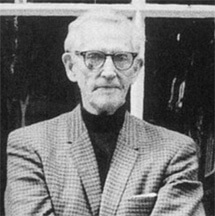
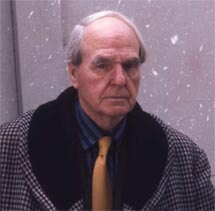
    Henry Moore, the celebrated English sculptor, is best remembered for his monumental public works exploring the female form, reclining figures, and family themes. Inspired by Michelangelo at age 11, Moore’s path to artistry was delayed by World War I service, where he was injured in a gas attack in 1917. After the war, he used his service grant to attend art school in Leeds, then won a scholarship to the Royal College of Art in 1921, followed by six months studying the Old Masters in Italy and Paris in 1924.

    Moore taught at the Royal College of Art for six years before joining the Chelsea School of Art. He married Irina Radetsky and settled in Hampstead among fellow artists. As a member of the Seven and Five Group, he created increasingly abstract works influenced by Picasso and Braque with surrealist touches. He helped organize the 1936 International Surrealists Exhibition, gaining wider recognition when collector Sir Roland Algernon Penrose purchased one of his controversial pieces in 1937.

    During World War II, Moore worked as a wartime artist for the English government, dramatically increasing his international exposure. After his home was bombed in 1940, he and Irina moved to a Hertfordshire farmhouse where he remained for life. His daughter Mary’s birth in 1946 inspired family-focused sculptures. That same year, his first retrospective opened at New York’s Museum of Modern Art—seven more would follow.

    Moore’s public sculptures appeared at prestigious locations including Cambridge, the University of Chicago, UNESCO in Paris, and College Green near the English House of Parliament. He established the Henry Moore Foundation in 1972 to support public art education. Represented by Park West Gallery, Moore became the defining voice of British sculpture, influencing generations of artists until his death in 1986 at his Hertfordshire home, now a 70-acre museum.

  • Aristide Maillol

    Aristide Maillol

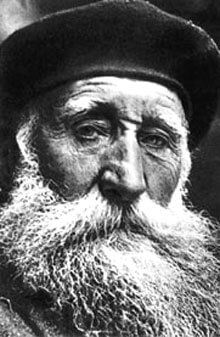
    Aristide Maillol was born in 1861 in Banyuls-sur-Mer, a southern French town. After moving to Paris in 1881 to study art, he enrolled in l’École des Beaux-Arts in 1885. Influenced by the Nabis, a group of French artists known for decorative patterns, Maillol initially excelled at tapestry and opened a workshop that earned him recognition for revitalizing this art form in France.

    At nearly 40 years old, an eye disease forced Maillol to abandon tapestry’s intricate work and turn to sculpture. Though he explored painting and woodcut illustration, sculpture remained his primary focus for the rest of his life. In this medium, he set the standard for European and American sculpture until the end of World War II and inspired future artists including Henry Moore, Constantin Brancusi, and Alberto Giacometti.

    Maillol concentrated on the female form, preserving the pure simplicity of Classical ideals through calm expression and harmonious balance. Rather than meticulous accuracy, he emphasized rigorous analysis of geometric form and mass that could be viewed in the round. He received numerous commissions, including a 1912 monument to Cézanne and several monumental war memorials after World War I. A major exhibition of his works was held in 1937 at the Petit Palais in Paris.

    Today, Maillol’s works are represented by Park West Gallery and permanently displayed in prestigious institutions including the Metropolitan Museum of Art, Museum of Modern Art, Solomon R. Guggenheim Museum, The National Gallery of Art, the Tate Gallery, and the Louvre Museum gardens.

  • Alex Meilichson

    Alex Meilichson

    Alex Meilichson was born in Meridia, Venezuela, and moved to Israel with his family during his teenage years. He studied sociology and political science at Tel Aviv University before pursuing his true passion for art. His formal training began when he returned to Venezuela to study at the Cristobal Rojas Art School in Caracas, and he completed his studies at the renowned Art Students League in New York City.

    Meilichson has developed a distinctive figurative style characterized by brilliant colors and an expressionist Ecole de Paris approach. Working primarily in ink, acrylic and oil on canvas, he creates Judaic themes, landscapes and still life paintings. His imagery presents an imaginary and playful world filled with wonderment and joy, using exotic and bold colors that reflect the influence of the Fauves, particularly Matisse and Chagall.

    The artist currently divides his time between Israel and New York, and travels extensively each year to Norway, Paris and Provence, drawing inspiration from the locales he visits and the everyday life he encounters during his journeys. He has exhibited in Caracas, Venezuela, appeared at Art Expo New York, and held a one-person exhibition at the Moshe Monson Gallery in Jerusalem. Meilichson is represented by Park West Gallery.
  • Mike Kupka

    Mike Kupka

    Mike Kupka discovered his passion for drawing as a child, eagerly copying the Sunday comics each week. He later studied at duCret School of Art in New Jersey, where he found his mentor, Peter Caras, and began painting seriously. Since then, he has never put down his brush.

    Kupka has built a remarkable portfolio painting darker characters with depth and personality. His subjects range from rock stars like Ozzy Osbourne to classic horror icons such as Frankenstein and Dracula, as well as reimagined Disney Villains. His work captures far more than simple likenesses—with soft lines and a rustic palette, he creates paintings with old world flair that reveal the full range of emotions in the villains he depicts. Looking at his paintings, viewers can see that these characters are delighted to be bad.

    In recent years, Kupka has expanded beyond villains to include star athletes in Superbowl illustrations and beloved Disney characters like Jack Sparrow from Pirates of the Caribbean. He produces artwork for major licensees including Lucas Films, Disney, and the NHL. Represented by Park West Gallery, Kupka continues to grow both his portfolio and his popularity among collectors who appreciate his distinctive style and character-driven approach.

  • William Lee

    William Lee

    William Lee’s passion for photography began in his teenage years when he discovered an article about building a do-it-yourself pinhole camera. Unable to afford a 135mm Kodak point and shoot camera on a teenager’s budget, he constructed his first camera by hand, driven by his curiosity about film theory.

    Today, Lee lives in the northwest United States, where he creates fine art, landscape, macro, and wildlife photographs. While his equipment has evolved to include the latest DSLR digital technology, his enthusiasm for the craft remains unchanged. His striking images have appeared in National Geographic, outdoor photographer magazines, the Oregonian newspaper, and numerous online publications.

    Lee’s talent has earned him recognition in the photography community, with more than 390 awards from various international and domestic competitions as of April 2012. His work is represented by Park West Gallery, where collectors can discover his compelling vision of the natural world captured through his lens.

  • Bob Kane

    Bob Kane

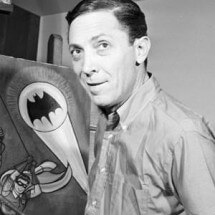
    Born Robert Kahn in New York City in 1915, Bob Kane changed his name legally at eighteen and launched a career that would transform American popular culture. He started as a trainee animator at Max Fleischer Studios in 1934, then moved into freelance comic book work in 1936, creating characters through Eisner & Iger for companies that would later merge to form DC Comics. In 1939, with colleague Bill Finger, Kane pitched his idea for “The Bat-Man” to DC Comics when he was only eighteen. Batman became one of the most popular comic books of all time, spawning animated, television, and cinematic features throughout the 20th and 21st centuries.

    Kane’s unmistakable line work and bold, electric coloration in his classic characters Batman and Robin became a constant part of American consciousness. After retiring from DC Comics in 1966, he concentrated on fine art. His animated creations included “Courageous Cat” in 1958 and “Cool McCool” in 1974, and he wrote the screenplay for “The Silent Gun” in 1969. By 1996, Kane had been inducted into both the Jack Kirby Hall of Fame and the Will Eisner Comic Book Hall of Fame.

    Kane’s Batman was included in the 1939 World’s Fair Time Capsule as an example of American culture. His works are held in many collections, including the Museum of Modern Art in New York City, the Whitney Museum of American Art, and St. John’s University in Jamaica, New York. He is represented by Park West Gallery.
  • Brian Jull

    Brian Jull

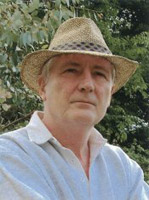
    Brian Jull is a self-taught artist born in 1949 in Greenwich, London, a historic riverside town whose naval heritage profoundly influenced his creative path. As a young man, he followed his father into the merchant Navy at 18, but by 21 he had married, started a family, and returned to England to pursue his true passion for art.

    Settling back home, Jull immersed himself in the masters at the nearby Maritime Museum and began painting seascapes along the English coast. Over the years, his style evolved significantly. His recent oil paintings capture the interplay of natural light on outdoor city scenes and landscapes, a shift inspired by visits to France where he studied the works of 19th-century masters like Georges Seurat, Claude Monet, and Pierre-Auguste Renoir.

    Jull’s creative process involves extensive travel to gather inspiration through sketches and photographs of the places he visits. His works are widely collected throughout England and internationally, and he is represented by Park West Gallery, where collectors continue to appreciate his luminous interpretations of the world around him.

  • Carol Jablonsky

    Carol Jablonsky

    Carol Jablonsky created whimsical lithographs, etchings, and sculptures that continue to delight collectors throughout the United States, Mexico, and beyond. Her distinctive works showcase the technical mastery she developed through years of dedicated art education and practice across multiple media.

    Born in 1939 in Port Washington, New York, Jablonsky studied at Boston University in Massachusetts, the Arts Students League in New York, and the Institute Allende in Mexico. She worked in watercolors, tempera painting, etchings, drypoints, and lithographs, developing a unique style that earned her recognition among both public and private collectors. Circle Fine Arts began publishing her original graphic works in 1972.

    Her art was featured in prestigious exhibitions at the El Paso Museum of Art in Texas, the National Society of Painters, Casein in New York, the Palace of the Legion of Honor in San Francisco, California, Pennsylvania State University in University Park, Pennsylvania, and the Society of the Four Arts in Palm Beach, Florida. She also held one-person exhibitions at Circle Galleries and Collectors Circle Galleries throughout the United States.

    Jablonsky passed away in 1992, but her work remains widely collected, exhibited, and admired. She is represented by Park West Gallery.

  • Tiefeng Jiang

    Tiefeng Jiang

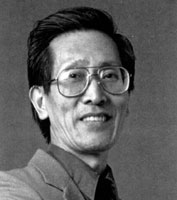
    Tiefeng Jiang is the founder of the Yunnan School of Painting, one of the most important contemporary movements of abstract art in China. His richly colored works feature figurative elements with contrasting patterns, focusing on women, horses, birds, and flowers through brightly colored ink and calligraphic lines. Painting as if creating stained glass windows, Jiang is considered at the forefront of contemporary Chinese art.

    After attending the Central Academy of Fine Arts in Beijing and studying with renowned Chinese artist Huang Yong-Yu, Jiang was assigned to produce propaganda posters during Mao’s Cultural Revolution in the 1960s and early 1970s. At night, he secretly developed his own distinctive style. Working primarily in watercolor and serigraphy, his art has been actively collected worldwide since the early 1980s.

    In 1979, the government commissioned Jiang to paint a mural representing Yunnan Province for the Great Hall of the People in Beijing. A year later, he was awarded second place in an international United Nations competition. In 1983, he came to the United States as part of a cultural exchange program with the University of Southern California. Jiang served on the board of directors for the Yunnan branch of the Chinese National Art Association from 1976 to 1983 and later became an instructor and professor at the Yunnan Art Institute. He is represented by Park West Gallery.