Archives: Artists

  • René Gruau

    René Gruau

    René Gruau was born Renato Conte de Savagli-Ricardelli in Rimini, Italy in 1910. His career in fashion illustration took flight when he and his mother moved to Paris in the late 1920s, where his work appeared in numerous newspapers and magazines. Gruau illustrated designs for fashion legends including Balenciaga, Elsa Schiaperelli, Hubert de Givenchy and Christian Dior. His friendship with Dior ran especially deep—the first collection for the House of Dior became possible because Gruau insisted that Dior accept sponsorship from textile magnate Marcel Boussac.

    When photography overtook illustration in the 1950s, Gruau shifted to advertising with remarkable success. He also created posters for film and theatre productions, including Fellini’s “La Dolce Vita” and Jean Renoir’s “French Cancan.” His work was displayed in exhibitions at the Musée du Costume at the Palais Galliera in Paris in 1989 and at the Musée de la Publicité in Paris in 1999.

    Gruau’s elegant style experienced a renaissance in the late 20th and early 21st centuries, appearing in magazines and advertising campaigns for Air France, Omega watches and Fiat. He died in March 2004, but his legacy endures through a permanent collection at the city museum in Rimini. Gruau is represented by Park West Gallery.

  • David Freeman

    David Freeman

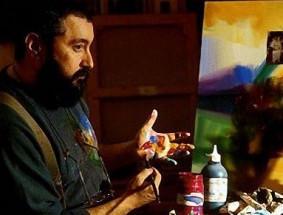
    David Freeman was born in Calcutta, India, in 1961 and moved to Britain in 1978. After graduating college in 1981, he established his own studio in London, where he spent several years working on commissions for books, magazines, posters, and greeting cards. Throughout this time, he continued developing his fine artwork, exploring various media including sculpture, before returning to his favorite subject: painting the human figure.

    Freeman’s treatment of his subjects reveals a deep understanding of the classical realist tradition. His use of light and darkness echoes the Baroque chiaroscuro made famous by Rembrandt and Caravaggio, while his figures and faces possess a luminescence reminiscent of late Italian Renaissance masters. The iridescent skin tones he creates recall the works of Tintoretto.

    The remarkable detail in Freeman’s paintings enhances the icon-like appearance of his figures, which seem frozen in time against his intricate patterned backgrounds. His colors are deeply rich, dark, and sumptuous, and his frequent use of gold leaf draws from the Byzantine tradition of decoration. Despite this classical approach, Freeman’s faces and figures communicate from an avant-garde perspective that references late 20th century figurative style. He is represented by Park West Gallery.
  • M. P. Gerald

    M. P. Gerald

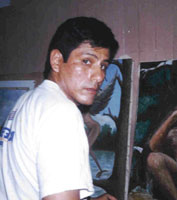
    M. P. Gerald creates photorealistic art distinguished by stunning accuracy and vibrant colors that capture the finest details of his subjects. Born in Ancash, Peru, he grew up in a creative household where his father painted and his mother worked as a well-known ceramicist. Gerald studied at the Escuela Nacional de Bellas Artes de Lima under masters including Milner Cajahuaringa and Miguel Angel Cuadros, graduating in 1988 with second place honors.

    Gerald transforms the world around him into colorful and expressive works on canvas, exploring subjects that range from luscious flowers to urban scenes and pop icons. His highly detailed floral compositions exquisitely capture everything from dew drops to petal textures, while his figurative works maintain photorealistic precision while invoking elements of Impressionism to bring energetic scenes to life.

    The artist is represented by Park West Gallery, where collectors appreciate how his expressive works seem to radiate with the very essence of their subjects, whether capturing the delicate beauty of nature or the vibrant energy of contemporary life.

  • Dima Gorban

    Dima Gorban

    Dima Gorban has built an international reputation for his richly colored, photo-realistic paintings and graphic works featuring wines and elegant interiors. Born in 1961 in the former Soviet Union and raised in Kishinev, present-day Moldova, he began painting at just seven years old. His early talent earned him a place at the Kishinev School of Art at age 10, and he later refined his skills at the Higher School of the Painting Arts in Kishinev, graduating in 1980. He continued his studies at Lvov Academy for Painting in 1989.

    After graduation, Gorban’s work appeared in exhibitions throughout Moldova and in a permanent collection at the Moscow Film Academy’s drawing department. He initially worked as a graphic designer, creating wine labels for Russia’s Ackerman Winery, which sparked his signature wine paintings. These works drew inspiration from childhood memories of his grandfather growing grapes and making wine for the family.

    When Gorban relocated to Israel in 1990, he continued as a successful graphic designer for a prominent textile and clothing manufacturer. However, nostalgia for painting eventually led him to pursue fine art full time. Today, his work is collected worldwide and has been featured in exhibitions in Kishinev, Moscow, Amsterdam, Tel Aviv, and New York. Gorban is represented by Park West Gallery.
  • Shari Erickson

    Shari Erickson

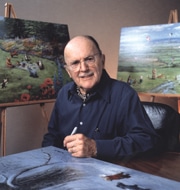
    American contemporary painter Shari Erickson graduated with honors from the Ringling School of Art in 1970. Before gaining national recognition, she established herself as a figurative muralist in her hometown of Atlanta, Georgia. Accomplished in many media, she also became a successful art instructor, potter, and jewelry designer.

    From early on, Erickson’s personal focus has been the creative contemplation of people. Sketchbook in hand, she could be found noting the gestures and body language of people in airports, courtrooms, or parks. This sensibility of figure and form remains at the heart of her talent and technique. Her love of figurative painting was renewed on her first visit to the West Indies in 1979, where she was beguiled by the saturated colors and swaying rhythms of island life. Her works often portray the day-to-day intimate lives of the families, children, merchants, and vendors of the islands, providing a rare glimpse into their real world.

    To lure travelers to the Virgin Islands, US Air magazine chose Erickson’s work for their December 1993 cover along with a feature article. She has also been honored with a special award of achievement by Windsor & Newton. Although she spends much of her time exploring the Caribbean with artist husband Douglas Kahle Gifford, many of her alkyd-oil, “A la Prima” studies are completed in their Western North Carolina studio. Erickson is represented by Park West Gallery.
  • Peter Ellenshaw

    Peter Ellenshaw

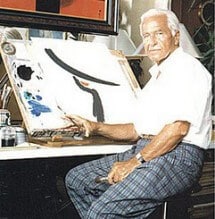
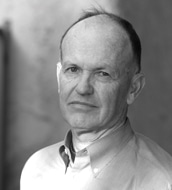
    Peter Ellenshaw was born in 1913 in England, where he endured a difficult childhood marked by his father’s death in 1921 and subsequent financial hardship. Frequent illnesses prevented him from attending grammar school, and at 14 he became an auto mechanic while nurturing his artistic talents through painting and drawing. His fortunes changed when he met Percy “Pop” Day, a pioneering visual effects artist who became his mentor and taught him the specialized technique of painting on glass to create matte backgrounds for film.

    After serving as a Royal Air Force pilot in World War II, Ellenshaw returned to studio work and in 1947 received a life-changing call to work for Walt Disney Studios on “Treasure Island.” His partnership with Disney would span over thirty years and earn him five Oscar nominations. He won an Academy Award for “Mary Poppins,” creating 102 different mattes that recreated Edwardian London. Walt Disney became both mentor and friend, though after Disney’s death in 1968, Ellenshaw’s passion for filmmaking waned.

    Ellenshaw increasingly devoted himself to landscape painting, and his final Disney film was “The Black Hole” in 1976. He later worked on “Superman IV” with his son Harrison in 1984. Now represented by Park West Gallery, Ellenshaw’s work appears in galleries worldwide and has earned honors from institutions including the American Film Institute, the Museum of Modern Art in New York, and the Academy of Motion Picture Arts and Sciences.

  • Amram Ebgi

    Amram Ebgi

    Amram Ebgi immigrated to Israel from Morocco under the auspices of Kibbutz Kfar Blum, where he received his early art training at the Tel Chai Institute, the Avni Institute, and the School of Advance Painting in Tel Aviv. As both painter and graphic artist, he served as the official state-designer for the Organization Kibbutzim in Israel. In 1969, he came to the United States on a scholarship to the Brooklyn Museum of Art in New York, where he developed his distinctive approach to contemporary printmaking at the Pratt Graphic Center.

    An eternal optimist, Ebgi creates works that reflect harmony, balance and joy in a simplified, decorative style. While he does not consider his art directly religious, he incorporates elements of Judaism throughout. Almost every piece features his cherished symbol of the bird, representing Israel’s freedom, along with vineyards, menorahs, men in taleisim, Noah’s Ark, doves, and flora. Each work takes approximately two months to create, with some composed of as many as 60 separate elements that blend into a meticulous symphony of design and color.

    Ebgi’s etchings have graced the covers of the Washington Post, World of Art, Israel, The Miami Herald, and Decor Magazine, as well as holiday cards published by UNICEF and Hallmark. His work is represented by Park West Gallery and has found its way into numerous collections, including that of President George Bush.

  • Harrison Ellenshaw

    Harrison Ellenshaw

    Harrison Ellenshaw grew up in the shadow of his father Peter Ellenshaw, a Disney Legend who won an Oscar for his visual effects work on Mary Poppins. Though fascinated by his father’s painting from an early age, Harrison found his talent intimidating and initially pursued a different path, earning a BA in psychology from Whittier College. During the recession of the early 1970s, his father suggested he try an apprenticeship in Disney’s matte department, where Harrison planned to stay just six months.

    Under mentor Alan Maley’s guidance, Harrison discovered his passion for film and matte painting. After only four years, he became department head—a position that typically required twelve years of experience. His career breakthrough came with Star Wars, followed by The Empire Strikes Back, establishing him as a talent in his own right. He then collaborated with his father on Disney’s The Black Hole in 1979 before contributing his distinctive touch to the visually stunning cult classic Tron.

    While working on the colorful Dick Tracy in 1989, Harrison encountered the Fauve movement at the Los Angeles County Museum of Art. Inspired by artists like Henri Matisse and Andre Derain, he transformed his fine art painting style, embracing vibrant, unexpected colors. His work has been exhibited at prestigious venues including Hammer Galleries in New York and galleries in London and San Francisco. Harrison has been nominated for an Academy Award and holds an honorary doctorate from the Academy of Art University in San Francisco. He is represented by Park West Gallery.
  • Victor Vasarely

    Victor Vasarely

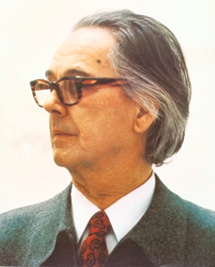
    Victor Vasarely was born in 1906 in Pécs, Hungary, and became one of the founders of Kinetic and Op Art. After studying at Mühely, the Academy of Painting based on Bauhaus teachings, in Budapest in 1929, he immigrated to France in 1930. His early career included commercial work at Havas advertising agency and Draeger print house during what became known as his “Graphic” period from 1929 to 1946, when he explored light, shadow, and contrast in works like The Zebras (1938).

    Between 1947 and 1958, during his “Belle-Isle” period named after his favorite French vacation spot, Vasarely achieved true abstraction through geometric compositions inspired by beach pebbles. His “Black and White” period from 1950 to 1965 developed the fundamental concepts of Op Art using only these two colors. In 1965, he participated in the landmark “Responsive Eye” exhibition at the New York Museum of Modern Art, which was dedicated exclusively to Optical Art.

    Throughout his career, Vasarely created more than one hundred commissioned monumental architectural works and had over one hundred solo exhibitions worldwide. He established his foundation in 1976 in Aix-en-Provence, where his inspiration Cezanne had lived and painted. Vasarely, who is represented by Park West Gallery, passed away on March 15, 1997, at age 91, leaving behind a revolutionary legacy that transformed modern art.

  • Danko

    Danko

    Born in 1962 in the famous port of El Callao, Peru, Danko grew up surrounded by creativity. His parents were professional dancers with a deep appreciation for the graphic arts, and from an early age he was exposed to the works of Peru’s most dramatic painters. This artistic environment shaped not only Danko but also his brother and sister, who became artists as well.

    Danko graduated from the prestigious Escuela de Bellas Artes in Lima, Peru, where he honed his skills and developed his distinctive style. He also studied Peruvian Dance at El Centro Folklorico del Magisterio “Alejandro Vivanco Guerra,” reflecting his family’s passion for movement and performance. His professional experience includes serving as an art teacher at the Escuela Superior de Formación Artística de San Pedro de Cajas, where he was also in charge of Social Projection and Administration.

    Throughout the early 1990s, Danko exhibited widely across Peru, with notable shows including the 1993 “Salon Annual” at the Museo de la Nación in Lima and the 1994 “Muestra Pintorica de la Exponea 1994” at Central National University in Huancayo. Today, Danko is represented by Park West Gallery, where collectors appreciate his vibrant celebration of Peruvian culture and heritage.