Archives: Artists

  • Tricia B. Benson

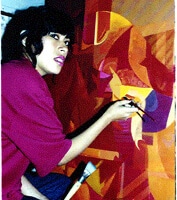
    Tricia B. Benson

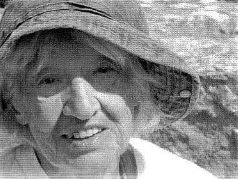
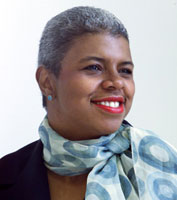
    At the age of 11, Tricia B. Benson wrote to Walt Disney Studios asking how to become an animator. Disney sent her detailed guidance on reaching that goal, and Benson went on to surpass it. She became an animator for popular television shows and comic strips including “The Simpsons,” “King of the Hill” and “Dilbert,” ultimately achieving her childhood dream by finding a home with Disney Fine Art, where she is now represented by Park West Gallery.

    Benson combines the beloved Art Nouveau style of the turn of the century with Disney’s cherished characters that audiences have loved for generations. What excites her most about art is line quality, that fluid motion giving a painting life through confident single strokes, a technique mastered by artists like Alphonse Mucha and Maxfield Parrish, and animators Marc Davis and Chuck Jones.

    She graduated from Loyola Marymount College with a degree in Film, as animation degrees were not yet available. Benson honed her craft through private seminars, where she was discovered. When the director of “The Simpsons” asked her to test for the series, she was simultaneously testing for “Futurama.” After receiving the call to join “The Simpsons” team, she celebrated by walking away from the other test, never looking back.
  • Gigi Boldon

    Gigi Boldon

    Gigi Boldon has been creating art since she first picked up a brush as a child. She earned her Bachelor of Fine Arts from the College for Creative Studies in Detroit, Michigan, and in 1993 made the courageous decision to leave a successful career as a graphic designer to become a full-time artist. Despite facing divorce and single parenthood, her work radiates the positive essence of womanhood and the spirit of love.

    Working primarily in acrylics and mixed media on paper, wood, or canvas, Boldon also excels in watercolor, collage, paper sculpture, stained glass, and airbrush. Her artistic inspiration comes from masters including Romare Bearden, Benny Andrews, William Johnson, Jacob Lawrence, Charles McGee, Henri Matisse, and Pablo Picasso. She is particularly drawn to the human form, stating that “the human form is one of the most beautiful of God’s creations” and believes the nude in fine art engages viewers differently than in commercial media.

    Boldon maintains her studio in Detroit, Michigan, where she works daily from mid-afternoon until the early morning hours. Her art appears in numerous corporate collections including Ameritech and MichCon in Detroit, and Penn Center in South Carolina. She is represented by Park West Gallery and has exhibited widely, including shows at the Museum of African American History in Detroit, Art Expo in New York, and galleries throughout the United States.

  • Georges Braque

    Georges Braque

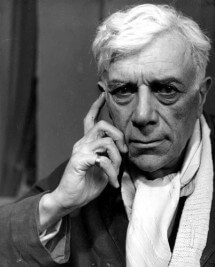
    Georges Braque, renowned for developing Cubism alongside Pablo Picasso, was born on May 13, 1882 in Argenteuil-sur-Seine near Paris, France. After his family moved to Le Havre in 1890, Braque initially trained as a house painter and decorator like his father and grandfather, while studying fine art at night at Le Havre’s École des Beaux-Arts. He moved to Paris in 1900, earning a certificate in draftsmanship in 1902 before dedicating himself to fine art full time at the Académie Humbert.

    After experimenting with Impressionism and Fauvism, Braque’s career transformed in 1907 when he attended a memorial exhibition for Paul Cézanne and met Pablo Picasso. Inspired by Cézanne’s geometric rendering and unconventional perspective, Braque and Picasso developed Cubism together. Art critic Louis Vauxcelles coined the term “Cubism” in 1908 after viewing Braque’s work. Braque held his first solo exhibition that year at the Daniel-Henri Kahnweiler gallery, showcasing his new Cubist style characterized by muted colors and fragmented subjects.

    After serving in World War I and suffering a severe head injury, Braque returned to painting in 1917 with freer forms and brighter colors. Beyond paintings, he created lithographs, sculptures, jewelry, and decorative art, including stage decor for Sergei Diaghilev ballets and the ceiling of the Louvre’s Etruscan Room. He received first prize at the 1937 Carnegie International in Pittsburgh. Braque died on August 31, 1963 and was honored with a state funeral at the Louvre. His influential work is represented by Park West Gallery.

  • Ingrid Alvarez

    Ingrid Alvarez

    Born in Lima, Peru, in 1969, Ingrid Alvarez showed an early passion for drawing that filled her school notebooks and occasionally got her into trouble. A perceptive teacher recognized her talent and strong character, encouraging her to channel her energy through drawing competitions. These early experiences helped Alvarez realize her calling for the arts.

    Determined to pursue her passion, Alvarez studied at Peru’s most prestigious institution, the Escuela Nacional de Bellas Artes, where she spent more than six years honing her craft. She graduated with the highest honors, a distinction that attracted the attention of several art dealers in Peru who have supported her artistic development ever since.

    Despite her relatively short career, Alvarez has exhibited at some of Lima’s most prestigious venues, including the Alianza Francesa, the American-Peruvian Cultural Institute, Museo de la Nacion, the American Embassy, the Russian-Peruvian Cultural Institute, and Lima’s City Hall. Her dedication and remarkable talent have established her as a significant contemporary artist with serious aspirations to become one of South America’s finest. Today, Ingrid Alvarez is represented by Park West Gallery, bringing her vibrant Peruvian perspective to collectors worldwide.

  • Susan Andreasen

    Susan Andreasen

    Susan Andreasen is a painter whose passion for the environment drives her distinctive approach to art. Through what she calls “Eco-Art,” she collaborates with corporations and wildlife foundations to raise awareness about environmental issues and elevate wildlife painting to fine art status. Growing up in the Massachusetts countryside with annual family vacations on the Maine shore, Susan was influenced by her mother Ruth, a Pratt Institute graduate and accomplished painter, and her father Andrew, an electrical engineer who instilled in her a profound love of animal life and nature.

    By age sixteen, Susan was exhibiting paintings in northern New Jersey. After graduating from the Parsons School of Design in New York City at twenty, she worked as a fashion illustrator for Fairchild Publications while developing her fine art practice. She devoted four years to ecological observation and painting through coastal travels and marine life studies. Susan has worked with numerous organizations including Friends of the Sea Otters, Save the Manatee Club, Greater Yellowstone Coalition, and Harbor Branch Oceanographic Institution, as well as corporate clients like Office Depot and the American Egg Board, for whom she represented Florida for two years.

    Represented by Park West Gallery, Susan believes contemporary art techniques should be applied to wildlife subjects, fusing both traditions to create awareness of endangered species and humanity’s relationship with nature.

  • Miguel Avataneo

    Miguel Avataneo

    Miguel Avataneo was born in 1962 in San Cristóbal, Argentina, and graduated from La Escuela de Artes de la Universidad Nacional de Córdoba in 1988. He has emerged as one of the brightest talents in Argentina’s contemporary art scene, creating work that bridges classical European traditions with the vibrant storytelling of South American magical realism.

    Avataneo’s paintings reflect his deep admiration for Renaissance masters including Raphael, Giorgione, Titian, and Corregio. He takes the foundations of European classicism and infuses them with naturally fantastical elements, placing exquisitely drawn figures in dreamlike environments that feel both familiar and otherworldly. His imagery carries a sensual and evocative quality that invites viewers into richly imagined worlds.

    What makes Avataneo’s work particularly captivating is his luxurious use of color and shadow, which gives his canvases a luminous, almost glowing quality that mesmerizes collectors. This masterful handling of light and tone creates depth and atmosphere that draws the eye and holds attention. His art has gained admiration from collectors throughout Latin America, the United States, and Europe. Avataneo is represented by Park West Gallery, where his distinctive blend of classical technique and magical vision continues to enchant art enthusiasts.

  • Jesus Bacci

    Jesus Bacci

    Jesus A. Villaflor Zevallos Bacci belongs to a new generation of Peruvian artists who have redefined their country’s artistic traditions. Born in 1952 in Peru, he moved to Lima in 1969 to study painting at the National School of Fine Arts. While Peru had championed figurative art since the 17th century, Bacci found himself drawn to painting landscapes and his natural surroundings instead of the human figure. His choice brought strong opposition from the traditional arts community, but he persevered and graduated with the highest honors.

    Bacci’s reputation as a landscape painter grew quickly, establishing him as one of Peru’s most gifted artists in the genre. He follows a Peruvian art movement that began in the 1970s, shifting focus away from the human figure and onto local surroundings. His mastery of oil painting techniques allows him to seamlessly blend colors and create rich, vibrant environments.

    Bacci’s detailed portrayals of tree-lined rivers, churning oceans, and cascading waterfalls serve as artistic windows into worlds waiting to be explored. His “Old Florida” landscapes transport viewers to long forgotten terrains that contrast sharply with the modern sprawl of cities like Orlando and Miami. Bacci is represented by Park West Gallery, where collectors can discover his inviting works that celebrate the beauty of nature.

  • Jacqueline Badord

    Jacqueline Badord

    Jacqueline Badord was born in Provence, France in 1917 into a musical family. Though her parents hoped she would play violin, she found herself drawn to Beethoven’s piano symphonies and, more importantly, to sketching. At a young age she attended the School of Fine Arts of Toulon, where she continued to develop her talents in drawing and sculpting. Her passion for sculpture led her to meet her husband, Olivier Descamps, and they married in 1942, creating works together in tandem.

    In 1959, Badord and Descamps moved to Paris with their three children. After architects noticed her work at her first exhibition, she received commissions to create pieces for public spaces across Europe and Canada. Her most monumental sculptures are in Provence, crafted from their studio in the heart of Paris’s Latin Quarter. Badord has always welcomed visitors to her studio, inviting them to explore her jewelry, models, and sketches while she explains her tireless process of reworking each piece from the first spontaneous pencil stroke to completion.

    Badord insists that drawing well requires constant practice and research, always examining the expression of movement. She carries a sketchbook and pencil everywhere, filling each page with scenes from her life that inspire her musical sculptures. She has published two limited edition books, “New York” and “Cello,” and recently received the prize for sculpture at the Institute of the Academy of Fine Arts. Badord is represented by Park West Gallery.

  • Gladys Morante

    Gladys Morante

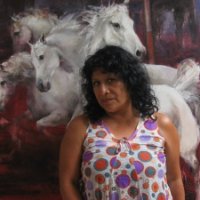
    Gladys Morante creates vibrant equestrian artwork that celebrates the strength and freedom of horses, though her relationship with these animals began quite differently. Born in Peru in 1963 as the daughter of a professional jockey, she initially held contempt for horses because of her father’s all-consuming dedication to them. At 14, however, she developed an interest in the animals and became a jockey herself.

    After high school, Morante found her calling while working as an assistant to a horse portrait artist, who mentored her in underpainting—applying the foundational first layer of paint. Recognizing her natural talent, he encouraged her to attend the School of Arts, where she graduated with honors. Though she considered careers in cartooning and veterinary medicine, her path led to advertising and design before she fully embraced painting horses.

    Morante’s inspiration stems from the beauty of equine anatomy and the spiritual qualities horses embody. She spent years teaching herself to capture the animal figure, having studied human anatomy but not horses specifically. Her distinctive technique combines oil paint with textured materials including acrylic, cardboard, sand and pebbles. She typically paints her horses white to convey metaphysical qualities, using warm colors to express vigor and violet tones in their faces to suggest spiritual and celestial traits. Morante is represented by Park West Gallery.

  • Dominic Pangborn

    Dominic Pangborn

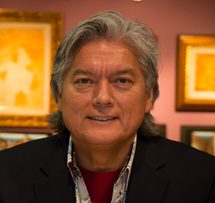
    Dominic Pangborn is a celebrated Korean-American artist whose work is best described as “evolutionary,” constantly changing in style, technique, and medium. Born in Goesan, South Korea in 1952 during the Korean War, he was sent to the United States at age 10 to be adopted by the Pangborn family in Jackson, Michigan. Facing language and cultural barriers, he discovered that art allowed him to express himself without words. He bought his first paint and boards at 12 and sold his first painting for $145, launching his artistic career.

    After high school, Pangborn enrolled in the Chicago Academy for the Arts, majoring in graphic design. In 1973, he became chief designer at the Ed Jaster Studio, where he pioneered multi-graphic presentations using slide projectors—a precursor to PowerPoint. He founded Pangborn Design in Detroit in 1979, expanding to branches in Chicago, New York, and Tokyo while incorporating his designs onto ties, scarves, and fashion accessories. In the 1980s, he returned to Korea after more than 20 years and reunited with his brother and sister.

    In the early 2000s, Pangborn transitioned back to fine art, experimenting with new mediums and styles ranging from photorealism to abstract expressionism. He is the innovator of “Art in Motion,” three-dimensional works that appear to move as viewers approach them. His work has been celebrated at the White House and the 2018 Winter Olympics, and he is represented by Park West Gallery.